
What should a social media strategy achieve?
For a business researching social media marketing Australia, the first step is to define the decision this part of the strategy needs to support. A practical platform and content framework based on audience, buying cycle and measurable business outcomes rather than vanity metrics.
Document the baseline, identify the pages or campaigns involved, and record what success would look like. This gives the team a reference point and makes later reporting more meaningful. It also helps separate a genuine improvement from normal fluctuations in demand, seasonality or competition.
Use analytics and Search Console data to understand which pages attract relevant visibility, what queries trigger impressions and where visitors take action. Combine quantitative data with sales feedback: the people handling enquiries often know which questions, objections and misunderstandings recur.
How to choose platforms for your audience
Platform selection and audience fit
Assign each content pillar an audience, purpose, owner, format and success measure. Review the calendar against the questions customers actually ask, and retire posts that no longer support a clear business objective.
Build content pillars that support business goals
A useful approach is to review the current situation before choosing a tactic. A practical platform and content framework based on audience, buying cycle and measurable business outcomes rather than vanity metrics.
Use analytics and Search Console data to understand which pages attract relevant visibility, what queries trigger impressions and where visitors take action. Combine quantitative data with sales feedback: the people handling enquiries often know which questions, objections and misunderstandings recur.
Keep claims factual. Do not publish guaranteed rankings, invented customer results, unsupported cost averages or statements about a local office unless the business can substantiate them. Accurate detail helps users make decisions and supports long-term trust.
Organic social media vs paid social advertising
The most reliable plan is based on evidence from customers, website behaviour and the actual search results. A practical platform and content framework based on audience, buying cycle and measurable business outcomes rather than vanity metrics.
Prioritise changes by likely business impact, confidence and effort. Fix issues that prevent important pages from being crawled or understood before spending time on minor cosmetic details. For content, improve usefulness and distinctiveness rather than adding paragraphs solely to increase length.
Review performance at a sensible interval. Look at relevant organic impressions and clicks, conversions, lead quality and sales outcomes where tracking permits. Rankings can be useful diagnostic signals, but they are not a substitute for qualified business results.
Content pillars and creative formats
Create a realistic posting and creative workflow
Implementation should be practical, measurable and consistent with the business’s real capabilities. A practical platform and content framework based on audience, buying cycle and measurable business outcomes rather than vanity metrics.
Keep claims factual. Do not publish guaranteed rankings, invented customer results, unsupported cost averages or statements about a local office unless the business can substantiate them. Accurate detail helps users make decisions and supports long-term trust.
Document the baseline, identify the pages or campaigns involved, and record what success would look like. This gives the team a reference point and makes later reporting more meaningful. It also helps separate a genuine improvement from normal fluctuations in demand, seasonality or competition.
Measure engagement, enquiries and commercial contribution
Do not treat this as an isolated SEO or advertising task. A practical platform and content framework based on audience, buying cycle and measurable business outcomes rather than vanity metrics.
Review performance at a sensible interval. Look at relevant organic impressions and clicks, conversions, lead quality and sales outcomes where tracking permits. Rankings can be useful diagnostic signals, but they are not a substitute for qualified business results.
The website and campaign message should answer the user’s immediate question. Explain the service, intended audience, process, limitations and next step in plain language. If the information is difficult to verify or understand, visitors may leave even when the page receives relevant impressions.
Social reporting beyond likes
Create a social media strategy with a defined commercial role
A social media plan should identify the job each platform is expected to perform. One channel may be useful for professional credibility and industry discussion, another for visual product discovery, and another for customer support or community updates. Choose based on the audience’s behaviour and the content the business can consistently produce. Do not select platforms only because they are popular. Review whether the intended customers use them to research suppliers, follow brands, ask questions or share recommendations, and consider whether the organisation has the resources to participate well.
Create content pillars that connect audience needs with business expertise. For example, a service company might publish practical explainers, behind-the-scenes process information, customer questions, verified project stories and team perspectives. Each pillar should have a purpose and a suitable format. A short video can demonstrate a process; a carousel can break down a decision; a longer post can explain a common misconception. Avoid posting repeated promotional messages with no new information. Make sure claims, testimonials and images are approved and that customer privacy is protected.
Measure social activity according to its role. Reach and engagement can show whether content is being seen and interacted with, but they do not automatically prove revenue impact. Track profile visits, website sessions, enquiries, assisted conversions and the quality of conversations where possible. Use tagged links and consistent campaign naming, then compare results with the objective set for each content pillar. If a post earns attention but attracts the wrong audience, revise the topic or distribution. If educational posts help sales teams answer recurring questions, retain them even when they do not generate immediate leads.
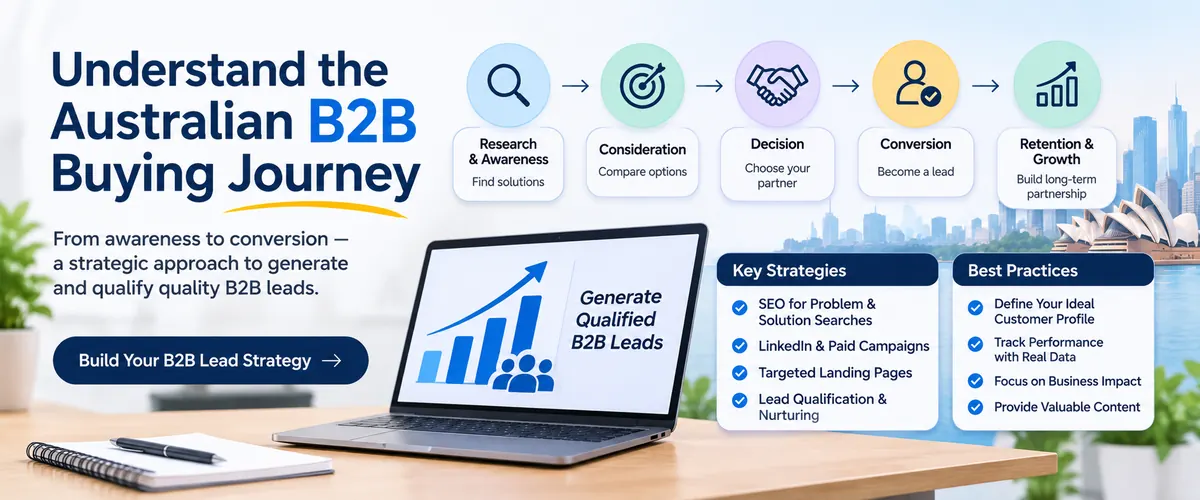
Turn your B2B marketing into a structured lead-generation process. C
Build a repeatable social content production workflow
Create a simple workflow that identifies the content owner, subject expert, reviewer, designer and publisher. Not every post needs a large production process, but claims about results, customer experiences, regulated subjects or product performance should be checked before publication. Keep a shared library of approved brand descriptions, images, service information and frequently asked questions. This reduces the risk of inconsistent messaging and makes it easier for several team members to contribute without publishing conflicting information.
Plan content in batches while leaving room for timely updates. A monthly calendar can define the theme, audience, format, intended action and destination link for each post. It should not force the business to publish simply to fill a slot. Review platform-specific requirements such as video dimensions, caption length and accessibility. Add captions to videos, use descriptive alternative text where supported and make graphics readable on mobile. Avoid using stock visuals that imply a customer project or local presence that does not exist.
At the end of each month, identify the content that produced useful audience response and the questions it generated. Keep a record of the strongest topics and the formats that were practical to produce. Retire themes that no longer support business goals. This creates a learning-based social media marketing Australia programme rather than a schedule that measures success by the number of posts published.
Create a platform-by-platform social media measurement plan
Use a separate objective for each platform rather than applying one universal social media KPI. For awareness, reach among the intended audience and video completion may be useful. For consideration, saves, shares, meaningful comments and visits to detailed resources may matter. For acquisition, track qualified website enquiries and assisted conversions. These measures should be selected before publishing so that the team knows what success means and does not choose a favourable metric after the campaign ends.
Use consistent UTM parameters and campaign names for links. Make sure analytics records the correct source and medium, and test that forms or calls are attributed as expected. Social platforms may report conversions differently from website analytics, so do not add platform totals together without understanding overlap and attribution windows. Where direct sales are offline, ask the team to record how the customer discovered the business and use that information as supporting evidence rather than treating it as perfect attribution.
Review creative performance in context. A post may earn a high number of views because it is entertaining but have little connection to the service. Another may attract fewer views but generate useful questions from the intended buyers. Share those observations with the people who manage sales and customer service. Over time, the business can focus on formats that are both sustainable to produce and useful to the audience. This creates a stronger social media marketing Australia programme than chasing reach alone.
Use social proof carefully in social campaigns
Customer stories and testimonials can help people understand the experience of working with a business, but they must be genuine and used with permission. Confirm the wording, context and any required disclosure before publishing. Do not imply that one customer’s outcome is typical or guaranteed. Where a result is quoted, explain the relevant context and avoid removing qualifications that change its meaning. Authentic proof is more credible than a polished claim that cannot be substantiated.
If the business does not yet have approved case studies, use other forms of useful evidence: explain the process, introduce the team, show how a product works or answer a common question. These formats can demonstrate expertise without inventing customer outcomes. Keep social content aligned with the website and ensure that any offer or service detail remains current. Trust is built through accurate information repeated consistently, not through exaggerated claims.
Retain a short record of the best-performing topics and the audience response they generated. Use it to plan future content, but avoid reposting the same message without a fresh angle. Consistency should come from the strategy, not duplicated captions.
Recommended action checklist
- Confirm the business objective and intended customer.
- Validate the search intent and review the current SERP before publishing.
- Make the article distinct from the target landing page and existing CONCAT blogs.
- Add factual examples, screenshots or expert commentary where available.
- Link naturally to the designated landing page and relevant service resources.
- Track organic visibility, engagement and qualified conversion outcomes.
FAQ
What digital marketing services does CONCAT offer?
Our best digital marketing services cover a full spectrum of growth-focused solutions, including SEO and content marketing, performance marketing across Google, Meta, and LinkedIn, social media and brand management, website design, development, and optimization, as well as detailed marketing analytics and reporting. We also offer lead generation and ecommerce/marketplace marketing for Amazon and Flipkart, delivered by specialist teams across India, the USA, MEA and Australia. Every campaign is planned and executed with a clear focus on ROI, driving meaningful conversions and measurable business outcomes.
How often should a business post on social media?
Choose a cadence the team can sustain while maintaining quality. Consistency, relevance and audience response matter more than posting daily without a clear purpose.
Which social platform should a small business use?
Select platforms based on where target customers research, communicate and discover providers. Consider the content formats the business can produce and the resources available to manage each channel.
How can social media generate business enquiries?
Publish useful content for the intended audience, make the offer clear and link to a relevant landing page when appropriate. Track qualified enquiries rather than relying on engagement alone.
Should every social post promote a service?
No. A balanced plan can include educational explanations, process information, customer questions, team expertise and occasional promotional posts. Each item should have a clear role in the customer journey.
Explore the relevant service with CONCAT. If your business is assessing its digital marketing or SEO priorities, contact CONCAT to discuss the website, audience and growth objectives.
We are here to answer your questions 24/7
Need A Consultation?
Have questions or need professional insight? Our consultation services are designed to provide you with the expert advice and tailored solutions you’re looking for. Whether you’re facing challenges in business, legal matters, or any other area, we’re here to help. Schedule a consultation today and take the first step toward solving your concerns with expert guidance.

Comments are closed