
When SEO is the stronger starting point
The most reliable plan is based on evidence from customers, website behaviour and the actual search results. A decision guide comparing speed, sustainability, intent, control, cost structure and the situations where both channels should be coordinated.
Prioritise changes by likely business impact, confidence and effort. Fix issues that prevent important pages from being crawled or understood before spending time on minor cosmetic details. For content, improve usefulness and distinctiveness rather than adding paragraphs solely to increase length.
Review performance at a sensible interval. Look at relevant organic impressions and clicks, conversions, lead quality and sales outcomes where tracking permits. Rankings can be useful diagnostic signals, but they are not a substitute for qualified business results.
Comparing total acquisition costs
When Google Ads makes more sense
Implementation should be practical, measurable and consistent with the business’s real capabilities. A decision guide comparing speed, sustainability, intent, control, cost structure and the situations where both channels should be coordinated.
Keep claims factual. Do not publish guaranteed rankings, invented customer results, unsupported cost averages or statements about a local office unless the business can substantiate them. Accurate detail helps users make decisions and supports long-term trust.
Document the baseline, identify the pages or campaigns involved, and record what success would look like. This gives the team a reference point and makes later reporting more meaningful. It also helps separate a genuine improvement from normal fluctuations in demand, seasonality or competition.
How to combine SEO and paid search
Do not treat this as an isolated SEO or advertising task. A decision guide comparing speed, sustainability, intent, control, cost structure and the situations where both channels should be coordinated.
Review performance at a sensible interval. Look at relevant organic impressions and clicks, conversions, lead quality and sales outcomes where tracking permits. Rankings can be useful diagnostic signals, but they are not a substitute for qualified business results.
The website and campaign message should answer the user’s immediate question. Explain the service, intended audience, process, limitations and next step in plain language. If the information is difficult to verify or understand, visitors may leave even when the page receives relevant impressions.
Building a blended search plan
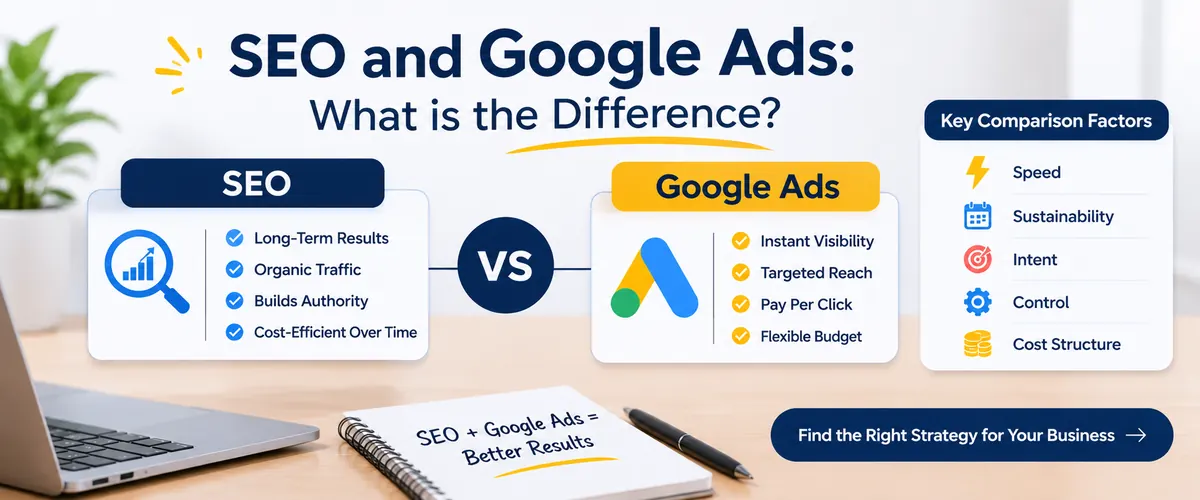
Choose SEO, Google Ads or a blended acquisition model
The choice between SEO and Google Ads should follow the demand pattern and the business’s time horizon. Paid search can place an offer in front of people searching for a service now, but visibility depends on budget, auction conditions, targeting and campaign quality. SEO develops the site’s ability to earn unpaid visibility through relevant pages, technical accessibility, useful information and authority. It can take longer to build, but strong pages may continue to attract qualified visitors after the initial production work is complete.
Map the buyer journey before assigning every query to a channel. Someone searching for an urgent provider may respond to a well-targeted ad and a direct contact option. Someone comparing approaches may need a detailed guide, case evidence and a service page that explains scope. Branded searches, informational questions and high-intent service terms should not all be evaluated using the same conversion expectation. Check the actual search results and the landing pages available to determine whether the opportunity is better suited to paid, organic or both.
A blended model can use paid search to test messaging and capture immediate demand while SEO improves priority service pages and supports questions that recur during the sales process. Share insights between teams: paid search terms can reveal language customers use, while organic content can answer objections that appear in sales conversations. Compare channels using qualified leads, acquisition cost and customer value, while recognising that attribution models may not capture every assisting interaction. Review the mix quarterly rather than treating one channel as permanently superior.
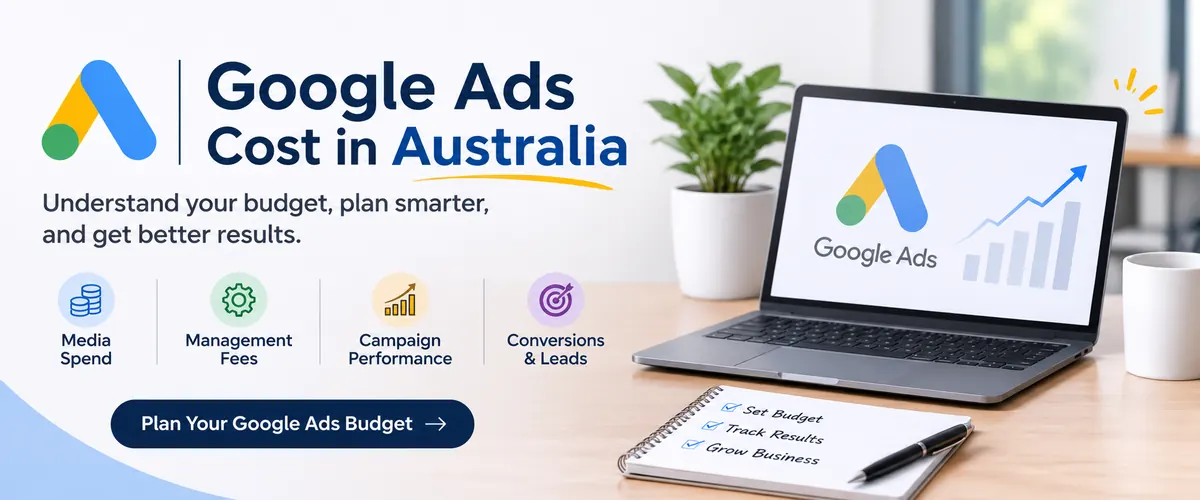
Make the most of your advertising budget with a well-planned Google Ads strategy.
Create a fair comparison using time, cost and customer value
A comparison between SEO and Google Ads should include the time required to produce results, the type of demand captured and the ongoing resources needed. Paid campaigns can be adjusted quickly, but their visibility generally stops when the budget stops. SEO work may require technical and editorial investment before it influences organic performance, yet useful pages can continue to attract relevant searches over time. Compare the full cost of each channel across an appropriate period rather than comparing one month’s ad spend with a long-term SEO outcome.
Use a common definition of a qualified lead and follow the lead through to sale. A channel that generates fewer enquiries may still be more valuable if those prospects have stronger intent or higher customer value. Include sales time, fulfilment capacity and margin in the calculation. Where attribution is incomplete, use a combination of analytics, CRM records and customer-reported discovery sources, and label the limitations instead of presenting the figures as exact.
Review the role of each channel at different stages of the buying journey. Paid search may capture an urgent query, while organic guides help a prospect understand a complex service before contacting the business. The channels can support one another. The right choice is not necessarily SEO or Google Ads; it is the combination that can produce profitable, deliverable customers under the organisation’s current budget and capacity.
Choose channel priorities by service line, not by habit
Different services can have different search demand, margins and customer journeys. A business may find that paid search is suitable for an urgent, clearly defined service while SEO is more appropriate for a complex offering that requires explanation and trust. Review each service separately before assigning a channel budget. This avoids spreading investment evenly across services that have very different commercial potential. Use sales feedback to understand which services are easiest to explain, which require consultation and which have longer decision cycles.
Build a channel matrix with the service, audience, intent, time horizon, expected cost, landing page and primary conversion. Include operational constraints such as appointment availability, stock, geographic coverage and response capacity. A campaign should not be scaled simply because its platform metrics look positive if the business cannot deliver the promised service. Similarly, a content programme should not be judged only on immediate leads if it supports a longer buying journey.
Review the matrix when a service is launched, paused or repriced. Use paid search insights to identify language that converts, and use organic search queries to discover information gaps. Keep the customer experience consistent across channels so that prospects do not encounter conflicting offers or eligibility details. This is how SEO vs Google Ads decisions become specific to the business rather than a generic debate about which channel is better.
Avoid judging channel performance from one reporting window
SEO and paid search respond on different timelines, so a single monthly snapshot may not provide a fair comparison. Paid campaigns can change quickly after budget or targeting adjustments, while organic visibility may take longer to reflect technical and content improvements. Compare like-for-like periods, note seasonal changes and record major website releases. If a service has a long sales cycle, include lead progression and customer value rather than relying only on the date of the first click.
Use several indicators to understand the result: relevant impressions, qualified visits, conversion rate, lead quality, cost and sales contribution. No single metric explains the whole journey. If data is incomplete, say so and use the best available evidence without claiming certainty. This prevents a business from abandoning a useful channel too early or continuing an ineffective one because one surface-level metric looks positive.
Revisit the comparison when the business changes its offer, margin or sales cycle. A channel that suited an earlier growth stage may no longer be the best fit. Keep the decision tied to current evidence rather than treating the original channel mix as permanent.
Recommended action checklist
- Confirm the business objective and intended customer.
- Validate the search intent and review the current SERP before publishing.
- Make the article distinct from the target landing page and existing CONCAT blogs.
- Add factual examples, screenshots or expert commentary where available.
- Link naturally to the designated landing page and relevant service resources.
- Track organic visibility, engagement and qualified conversion outcomes.
FAQ
What digital marketing services does CONCAT offer?
Our best digital marketing services cover a full spectrum of growth-focused solutions, including SEO and content marketing, performance marketing across Google, Meta, and LinkedIn, social media and brand management, website design, development, and optimization, as well as detailed marketing analytics and reporting. We also offer lead generation and ecommerce/marketplace marketing for Amazon and Flipkart, delivered by specialist teams across India, the USA, MEA and Australia. Every campaign is planned and executed with a clear focus on ROI, driving meaningful conversions and measurable business outcomes.
Can SEO replace Google Ads completely?
Paid search may help test demand quickly if the offer and landing page are ready. SEO should also begin early when the business needs a sustainable foundation for future discovery.
Which channel is better for a new business?
Paid search may help test demand quickly if the offer and landing page are ready. SEO should also begin early when the business needs a sustainable foundation for future discovery.
How should SEO and Google Ads performance be compared?
Use qualified leads, customer value and acquisition cost, while accounting for different timelines and assisted interactions. Avoid comparing clicks or one month’s spend as if the channels work identically.
Can Google Ads help with SEO rankings?
Paid advertising does not directly improve organic rankings. However, search-term and conversion insights from campaigns can inform content, landing-page messaging and keyword priorities.
Explore the relevant service with CONCAT. If your business is assessing its digital marketing or SEO priorities, contact CONCAT to discuss the website, audience and growth objectives.
We are here to answer your questions 24/7
Need A Consultation?
Have questions or need professional insight? Our consultation services are designed to provide you with the expert advice and tailored solutions you’re looking for. Whether you’re facing challenges in business, legal matters, or any other area, we’re here to help. Schedule a consultation today and take the first step toward solving your concerns with expert guidance.
Comments are closed