
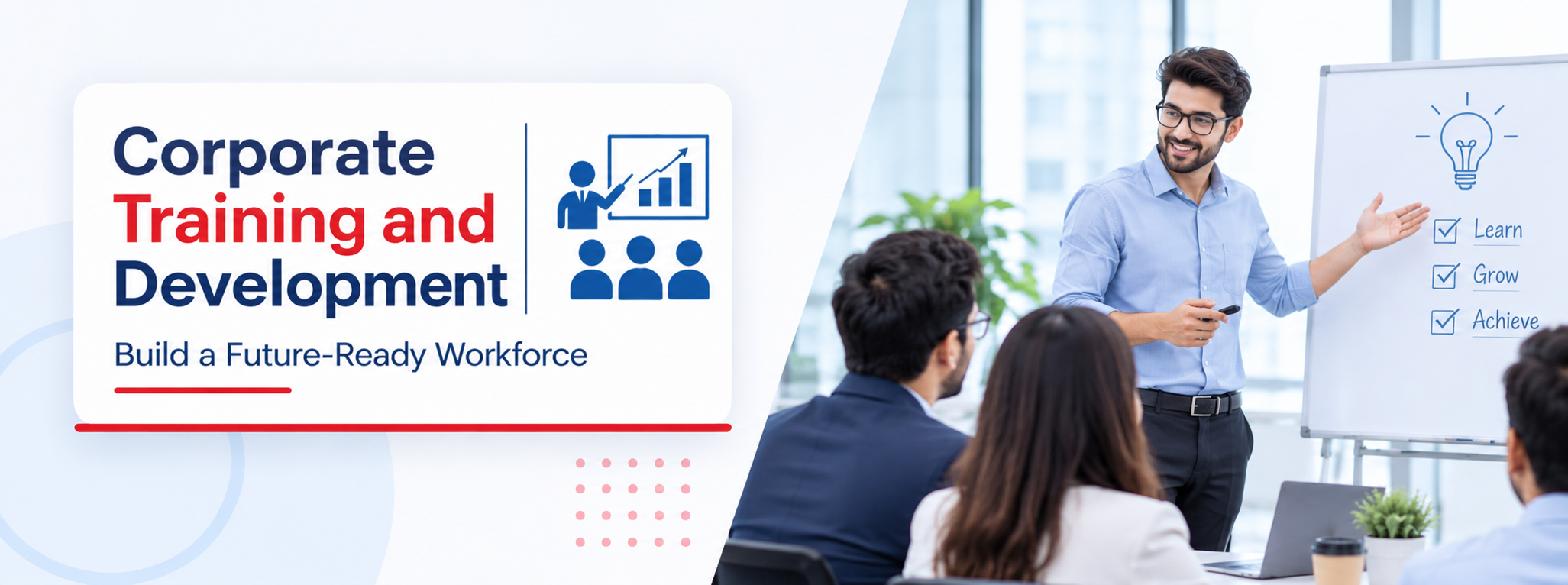
Strong corporate training and development programs help organizations close critical skills gaps, improve employee performance and prepare teams for changing business demands. As technology, customer expectations and working practices evolve, businesses need more than occasional training sessions. They need a structured learning approach that connects employee capabilities with operational priorities, supports career growth and produces outcomes that managers can measure.
The global corporate training market is a substantial and evolving sector, reflecting the importance organizations place on workforce capability. The source draft cites a forecast of USD 458.7 billion in 2026, rising to USD 777.5 billion by 2033 at a 7.8% CAGR. These figures should be checked against the original Grand View Research report, including the report date and methodology, before publication.
Despite significant investment, training does not always translate into better performance. Generic content, low engagement, limited manager involvement and a lack of measurement can make it difficult to demonstrate value. Organizations that get more from learning and development start with real skills needs, connect training to everyday work and evaluate whether employees can apply what they learn.
What Is Corporate Training and Development?
Corporate training and development is a planned approach to improving employees’ knowledge, skills and workplace capabilities in line with organizational goals. It can include technical and digital skills, compliance, onboarding, leadership, communication, sales and role-specific learning. Effective programs begin with a skills-gap analysis, use suitable delivery methods, involve managers, reinforce learning on the job and measure changes in performance—not just course completion.
Why Corporate Training and Development Matters More Than Ever
Workforce development has become a strategic business priority as organizations adapt to technology changes, shifting customer expectations and evolving job requirements. A well-designed learning program can help businesses strengthen internal capabilities instead of relying exclusively on external recruitment.
Technology and AI Are Changing Required Skills
Digital transformation and AI adoption are changing how many roles are performed. Employees may need stronger data literacy, digital tool proficiency, cybersecurity awareness, critical thinking and the ability to work effectively alongside automated systems. Training helps teams understand new tools, apply them responsibly and adapt processes as technology changes.
Employee Growth Supports Retention and Engagement
Employees are more likely to see a future with an organization when they have opportunities to develop relevant skills and progress in their careers. Learning pathways, coaching and internal mobility can support engagement while helping businesses retain institutional knowledge. Training alone cannot solve every retention issue, but it can form an important part of a broader employee experience strategy.
Upskilling Can Strengthen Internal Talent
When a business introduces new systems, expands into a market or changes its operating model, existing employees may be able to take on new responsibilities with targeted development. Internal upskilling can reduce dependence on external hiring for selected roles and help preserve valuable organizational knowledge.
Learning Builds Organizational Resilience
Continuous learning helps teams respond to changing regulations, customer needs, business processes and competitive conditions. Organizations that treat learning as an ongoing capability—not a once-a-year event—are better positioned to identify emerging skill needs and respond in a structured way.
What Effective Corporate Training and Development Looks Like
1. Needs-Based, Not Calendar-Based
Effective programs begin with a skills-gap analysis tied to actual business objectives. Rather than repeating the same annual training calendar regardless of business conditions, organizations should identify the capabilities needed for priorities such as product launches, market expansion, technology adoption, service quality or operational improvement.
A needs assessment can combine performance data, manager feedback, employee input, role requirements and future workforce planning. The result should be a prioritized learning plan that identifies who needs training, which capabilities need improvement and how progress will be assessed.
2. Blended Delivery That Fits the Learning Objective
Different topics benefit from different delivery methods. Instructor-led sessions can support complex, discussion-heavy subjects such as leadership, negotiation and problem-solving. Digital and self-paced learning can make repeatable content—such as onboarding, compliance and software basics—more accessible at scale.
A blended model may also include workshops, simulations, peer learning, mentoring, coaching and applied projects. AI-supported learning platforms can help personalize content or recommend practice activities, but their use should be guided by learning objectives, data safeguards and human oversight.
3. Manager Involvement, Not Just HR Ownership
Training is more likely to influence workplace behavior when managers reinforce it after the formal session. Managers can discuss learning goals, provide opportunities to practice new skills, give feedback and connect course concepts to real tasks.
HR or the learning team should coordinate the program, but managers help make learning part of day-to-day work. Without this reinforcement, employees may complete a course without changing how they perform their roles.
4. Measurable Business Outcomes
Completion rates and attendance are useful administrative measures, but they do not prove that training improved performance. Mature learning programs connect development to indicators such as reduced error rates, faster onboarding-to-productivity time, improved sales performance, better customer service or stronger leadership readiness.
Set a baseline before training begins, identify the expected behavior or performance change and decide when follow-up measurement will occur. Where several factors affect an outcome, be transparent about what can reasonably be attributed to the training.
5. Continuous, Not One-Time
Skill requirements can change quickly, particularly in areas such as AI tools, data literacy, digital operations and customer experience. Continuous learning gives employees access to relevant resources and practice over time rather than relying on a single training event.
Organizations can support continuous development through learning libraries, short refresher modules, role-based pathways, communities of practice, coaching and regular skills reviews. The content should remain current and connected to real work.
Types of Corporate Training Programs Businesses Can Use
Technical and Digital Skills Training
Technical training helps employees use the systems, software, tools and processes required for their roles. Depending on the organization, this may include data analysis, cybersecurity awareness, digital platforms, AI literacy, automation tools or specialized technical capabilities.
Leadership and Management Development
Leadership programs can strengthen communication, delegation, decision-making, conflict resolution, coaching and team management. Development should be relevant to the level and responsibilities of participants, from new supervisors to experienced leaders.
Communication and Interpersonal Skills
Workplace communication, collaboration, presentation, negotiation and problem-solving skills influence how teams work together and serve customers. Practical exercises and feedback can help employees apply these capabilities in real situations.
Sales and Customer Service Training
Sales and service teams may benefit from product knowledge, consultative selling, objection handling, customer communication, complaint resolution and service standards. Programs should connect learning to customer experience and sales processes.
Compliance, Safety and Workplace Training
Compliance and safety training helps employees understand relevant policies, procedures and responsibilities. Content should reflect the organization’s industry, applicable requirements and actual workplace risks, and should be reviewed when rules or processes change.
Onboarding and Role-Specific Training
Structured onboarding helps new employees understand the organization, role expectations, systems and working practices. Role-specific learning should clarify the skills and standards required to become productive and confident in the position.
Onboarding and Role-Specific Training
- Generic, off-the-shelf content that is not adapted to the organization’s challenges, roles or culture.
- No pre-training baseline or post-training evaluation, making it difficult to assess impact.
- Treating learning as a compliance-only activity and overlooking capability building and leadership development.
- Limited manager involvement, leaving employees without opportunities to practice new skills on the job.
- Ignoring technology fluency, data literacy and AI awareness as job requirements evolve.
- Overloading employees with long sessions or content that is difficult to access when needed.
- Failing to update learning materials when systems, policies, products or processes change.
How to Build a Business Case for Investment in Training
A strong business case connects learning investment to operational priorities and measurable outcomes. Leadership teams should understand which capability gaps are affecting performance, what the proposed program will address and how the organization will evaluate progress.
1. Identify the Business Problem
Start with a specific issue or opportunity, such as slow onboarding, recurring errors, inconsistent customer service, low sales conversion or a shortage of internal candidates for leadership roles. Avoid proposing training as the solution before confirming that a skills gap is actually contributing to the problem.
2. Define the Desired Change
Specify what employees should know or be able to do after the program. Clear learning objectives make it easier to select suitable content, delivery methods and evaluation measures.
3. Estimate Costs and Resources
Consider program design, trainers, learning platforms, employee time, materials, travel and any required technology. Include the time managers need to reinforce learning and the resources required to maintain content.
4. Select Relevant Measures
Choose measures linked to the original business issue. Examples include time to productivity, error rates, sales performance, customer satisfaction, safety incidents or internal promotion readiness. Use baseline and follow-up data where possible.
5. Review and Improve
Evaluate the results, gather participant and manager feedback, and adjust the program. Training should be treated as an improvement cycle rather than a one-time purchase.
How to Measure the ROI of Corporate Training and Development
Training ROI should be assessed through a combination of learning, behavior and business measures. A practical evaluation framework can include:
- Participation and completion: who attended and completed the learning activity.
- Knowledge or skill development: what changed in assessments, demonstrations or practical exercises.
- Workplace application: whether employees use the new skills in real tasks, observed by managers or measured through work samples.
- Operational outcomes: changes in errors, productivity, onboarding time, service quality or sales performance.
- Business impact: the extent to which the measured changes support financial, customer or strategic objectives.
The most useful measures depend on the program. For example, a software training program may be assessed through task accuracy and time saved, while a leadership program may require longer-term feedback on team performance, retention or succession readiness. Avoid attributing every business change to training when other factors may also be involved.
How CONCAT Supports Corporate Training and Development
CONCAT works with organizations to shape corporate training around identified skills gaps and business priorities rather than relying on generic, one-size-fits-all content. A useful training engagement should begin by understanding the workforce, roles, performance challenges and capabilities the business needs to build.
Explore CONCAT’s Human Resource and Training services to learn more about its HR and workforce development offering. Businesses can discuss their training objectives, employee groups, delivery requirements and the outcomes they want to measure before defining a suitable program.
Whether the priority is technical upskilling, leadership development, workplace effectiveness or role-specific learning, the program should be practical, relevant to the organization and supported by managers. Clear objectives and follow-up measurement help leadership understand what employees have learned and whether that learning is being applied.
Frequently Asked Questions
Corporate training usually refers to specific learning activities designed to build skills or knowledge, such as technical, compliance, sales or communication training. Learning and development is broader: it includes training as well as career development, leadership pathways, succession planning and an organization's ongoing learning strategy.
Budgets vary by industry, company size, workforce needs and program complexity. Organizations should identify priority skills gaps and expected outcomes before setting a budget. Costs may include design, trainers, employee time, learning platforms, materials and follow-up evaluation.
Start with a defined business problem and baseline, then measure changes in relevant outcomes such as error rates, onboarding time, sales performance, customer satisfaction or employee capability. Completion rates alone are not sufficient to demonstrate return on investment.
The supplied source identifies technical and digital skills, including AI literacy and tool adoption, alongside leadership development and change management. The right priorities will differ by industry, role and organizational strategy, so businesses should validate demand through a workforce skills assessment.
The choice depends on internal expertise, capacity, subject matter and scale. Many organizations use a blended approach: internal teams deliver company-specific onboarding and culture training, while external specialists support selected technical, leadership or compliance programs.
A focused, needs-based plan can help smaller organizations prioritize the skills with the greatest business relevance. Blended delivery, digital resources, group workshops and phased learning pathways may make development more scalable than relying exclusively on in-person sessions.
Effective programs are tied to business needs, designed for the learners, delivered through suitable methods, reinforced by managers and evaluated against relevant outcomes. Employees should have opportunities to apply and practice new skills after training.
There is no single schedule for every organization. Training frequency should reflect role requirements, regulatory obligations, technology changes, performance needs and employee development plans. Some topics require periodic refreshers, while other skills benefit from continuous learning.
A skills gap analysis compares the capabilities employees currently have with the capabilities required for their roles and future business objectives. It helps organizations prioritize training, recruitment, coaching or process changes based on evidence.
AI can support personalized learning recommendations, practice activities and content discovery. Organizations should review accuracy, privacy, accessibility and fairness, and ensure that AI tools support rather than replace appropriate human guidance and accountability.
Hire Smarter. Build Stronger Teams with Concat HR Solutions!
Get a Free Consultation & Transform Your Workforce Strategy Today!
Unlock the full potential of your business with our end-to-end HR Services. Whether you're scaling rapidly or refining your talent operations, Concat delivers customized HR solutions that drive efficiency, compliance, and performance across every level.
From recruitment and onboarding to payroll, compliance, and virtual HR leadership — we help you attract, manage, and retain top talent effortlessly.
✅ Expert-Led Hiring & Talent Acquisition
✅ State-of-Art HRMS and Employee productivity tools
✅ End-to-End Payroll & Compliance Support
✅ Virtual CHRO & Strategic HR Consulting
Smarter Hiring. Seamless HR. Scalable Growth.
Let Concat be your growth partner in building a future-ready workforce.
Comments are closed